
Folkartopedia is a sincere endeavor in the direction of preservation, documentation, and creation of a digital archive of the history and culture of folk arts with a mission to promote art education, research, and documentation in this field. Become a member of Artists Archive or help us enrich the archive. Thank you in advance for your support !
CELEBRATION OF FOLK TRADITIONS
Celebration of Folk Traditions
The 2nd edition of the Celebration of Folk Traditions is scheduled to be held in Patna from April 16-20, 2026.
Announcements →
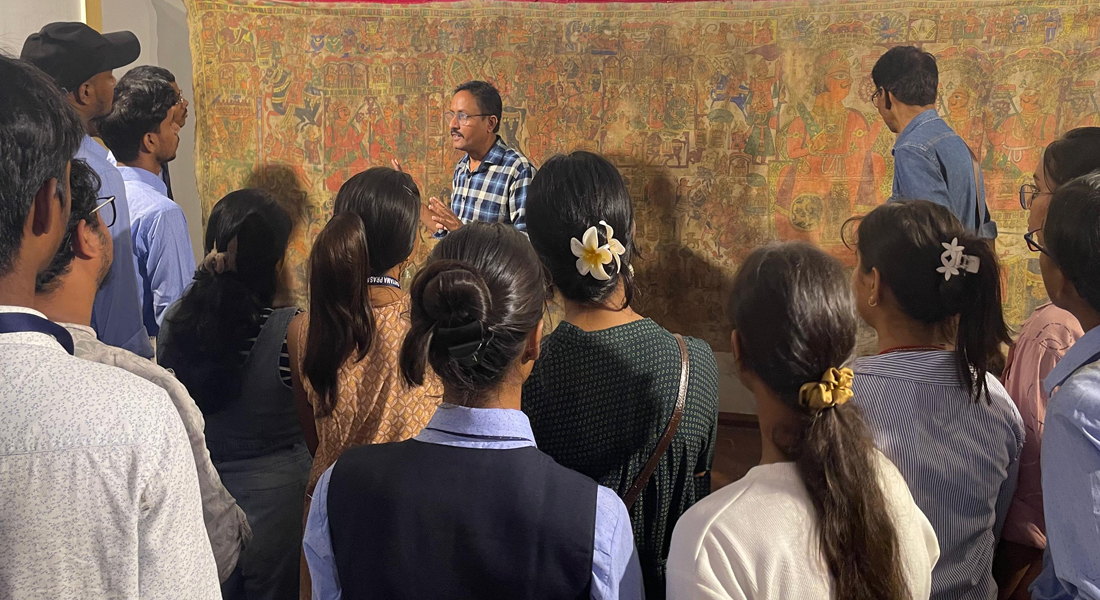
Celebration of Folk Traditions, Ranchi edition, was held in the Audrey House, Ranchi, from October 10-15, 2025, under the title LOKA 2025.
Click here for highlights →
The debut edition of the Celebration of Folk Traditions was held in the College of Arts and Crafts, Patna campus, from April 18-20, 2025.
Click here for highlights →
The Folkartopedia initiative “Celebration of Folk Traditions” is an attempt to engage with folk art traditions in their modern contexts and through a contemporary lens. Folk arts are, by nature, in step with their times. That is why, in their themes, characters, forms of presentation, and symbolic meanings, they effortlessly embody elements that reflect their philosophy of life-the worldview of those who safeguard this heritage.
At its heart, this celebration is an effort to understand how the life philosophy inherent in folk art traditions-and in the artists associated with them-is expressed through various artistic forms, and how, by transcending the boundaries of the present, they begin to shape new definitions of art on alternative platforms.
The Celebration aims to explore the aesthetic elements embedded in traditional folk practices, along with the sources of inspiration behind their contemporary expressions. It seeks to understand how an art-conscious society-its fundamental daily needs, the creative processes that meet them, and the visual languages associated with them – evolves from the ordinary to the extraordinary through the infusion of new ideas and themes.
Amidst all this, a central question arises: how accessible are the concepts behind these expressions, the techniques involved in their creation, and the alternative platforms where they emerge? And, how navigable is the path that leads us to them?